Animal cruelty in China became personal to me through a sound I couldn’t ignore.
One cold November morning in Shanghai, I heard what sounded like a distressed puppy crying outside my apartment. The sound continued for so long that I eventually went to the window to find out where it was coming from.
On my next-door neighbor’s patio was a small black puppy inside a cage. I recognized the cage. A softshell turtle had lived in it before.
And as much as I hate to admit it, I didn’t feel the same urgency for the turtle.
That difference in my own reaction became one of my earliest confrontations with speciesism. That was also when animal cruelty in China stopped feeling like an abstract issue and became something I was witnesseing from my own window.

The owner would let the puppy out in the following days to get some air while he cleaned the cage. Then, he’d put her back as soon as he finished cleaning. The moaning would resume. The puppy’s crying eventually turned into barking, and the owner had no intention of taking the dog inside, even when it was pouring. The barking continued until the puppy tired herself out.
“What can I do?” I asked myself.
Animal Protection in China Remained Fragmented
China still lacks a comprehensive nationwide animal-welfare law that protects all animals from cruelty. Protections are spread across wildlife, livestock, laboratory-animal, and local companion-animal regulations, which leaves significant gaps in how neglect and abuse are addressed.
That legal fragmentation is one reason conversations about animal cruelty in China can become complicated very quickly: different animals receive very different levels of protection.
I sent a public message to my friends in China to see if I could contact any organizations for a rescue mission. A few friends expressed concern, but no solution emerged. All I could do was sit in the living room and try to distract myself.
The situation remained for several weeks until I moved out of the apartment. I remember the puppy cried less and less as the days went by, as if the dog had finally accepted fate.
At the time, I worried that people around me would think I was overreacting. It’s also easy for Western observers to condemn animal cruelty in China while treating our own culturally normalized forms of animal exploitation as invisible. We may become outraged when a dog is confined in a cage or a wild animal is forced to perform, while barely questioning the suffering built into the production of meat, dairy, eggs, leather, or other animal products.

Are people even talking about animal rights and animal cruelty in China?
At first, I was furious and felt useless because I couldn’t do anything about the situation. At the time, I trued to explain the situation through culture, law, habit, and the possibility that the owner simply didn’t understand the dog’s needs the way I did.
“He didn’t know any better,” I told myself.
That thought made me feel better for a moment. But eventually I realized that explanation can become another way of avoiding the uncomfortable question: when does not knowing become something we are responsible for learning?
And the puppy wasn’t the only example I encountered.
Over the years I lived there, animal cruelty in China became something I noticed not only in private homes, but also in zoos, museums, commercial settings, and ordinary public behavior.
What I Witnessed in Zoos, Museums, and Everyday Life.
When I visited the Shanghai “Natural” Wild Insect Museum, they kept turtles in boxes almost exactly their size. The Shanghai Wild Animal Zoo is relatively thoughtful about giving animals the space they need, but it ruins that by hosting regular circus shows. I also saw a teenage tiger walking around in circles anxiously inside a box with glass windows no bigger than 10 square meters.
Despite signs instructing visitors not to disturb the animals, adults shouted or banged on the glass windows to attract the animals’ attention, and their children immediately imitated them. I had to ask the father to stop, and the mother immediately scolded him.
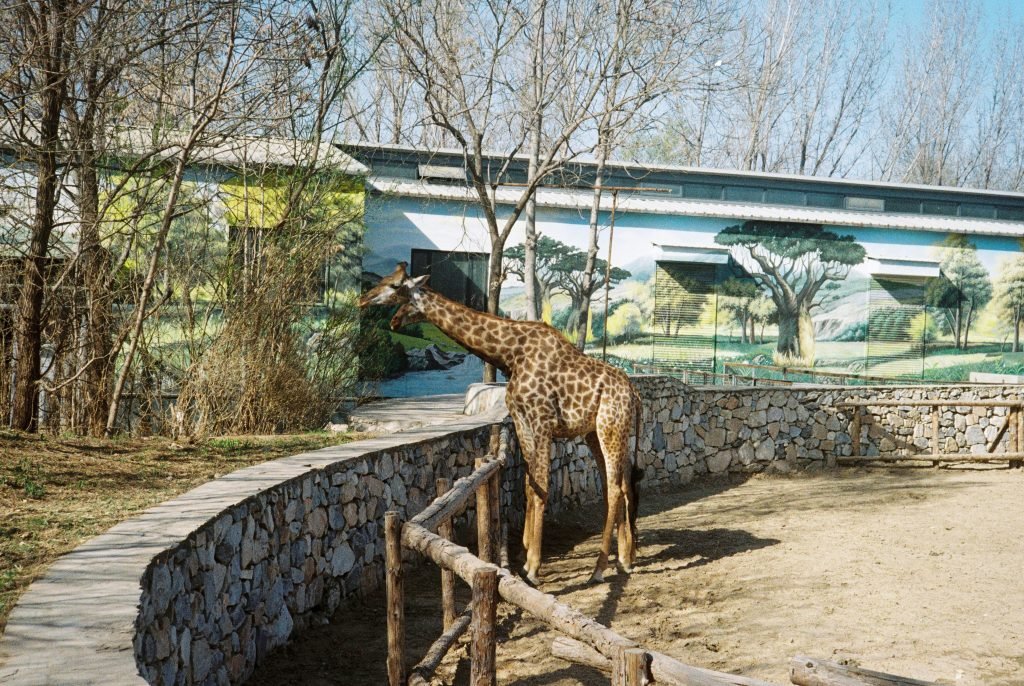
Some things have changed since I first wrote this. Animal-welfare organizations and members of the Chinese public have successfully pushed many zoos and other venues to stop animal performances, although enforcement and welfare standards remain uneven.
None of these experiences describe every person in China, nor do I think cruelty belongs to one culture. They describe things I personally witnessed while living there — and the questions those experiences forced me to ask.
What does mistreating animals in public teach our children? Children learn by example, and this is what we are showing them. We cannot keep telling ourselves, “They don’t know any better,” because that will only become ignorance.
Organizations like Animals Asia and SPCA Hong Kong have also been making changes for many years. However, people still breed puppies and kittens for trade. They paint Brazilian turtle shells and give them to children as prizes at carnivals in plastic bags. One of my former piano students brought it into his lesson.
Animal welfare advocacy existed in China then and has continued to grow since, although legal protections remain fragmented and attitudes vary widely across regions and communities.
A softshell turtle I saw on one of the busiest streets in Shanghai. People walked past, and no one intervened — including me. That moment stayed with me, not only because of the animal’s condition, but because it forced me to confront what I had also normalized, overlooked, or felt powerless to stop.

What the puppy actually changed for me
Looking back, what animal cruelty in China ultimately changed for me was not only how I saw what other people were doing, but how closely I was willing to examine my own hierarchy of compassion. The most uncomfortable part of this experience wasn’t only what my neighbor did.
It was recognizing the hierarchy that already existed inside me.
The puppy’s suffering disturbed me immediately. The turtle, living in essentially the same cage, didn’t produce the same response.
The difference is speciesism in one of its most ordinary forms.
We decide that one animal is family, another is food, another is entertainment, another is decoration, and another barely registers at all.
China did not invent that hierarchy. Neither did the West.
My years in Shanghai gave me the chance to see certain forms of animal exploitation more clearly because they were unfamiliar to me. Later, becoming vegan forced me to ask a harder question: which forms of suffering had remained invisible precisely because they were familiar?
That shift also changed how I think about veganism itself. I no longer see it as a spiritual identity or a marker of moral purity, but as one way of making compassion materially consistent with the choices I make.
I still believe animal cruelty in China deserves attention. But today I am less interested in using another culture as evidence of cruelty than in asking what our reactions reveal about the lines we draw between animals — and whether those lines remain defensible once we actually look at them.
You can read more about animal cruelty in China and Asia here.
P.S. I originally wrote this article on January 19, 2019, shortly after moving away from Shanghai. I have revisited and edited it several times during the 7+ years since becoming vegan, as my understanding of speciesism, animal ethics, and my own participation has continued to evolve.