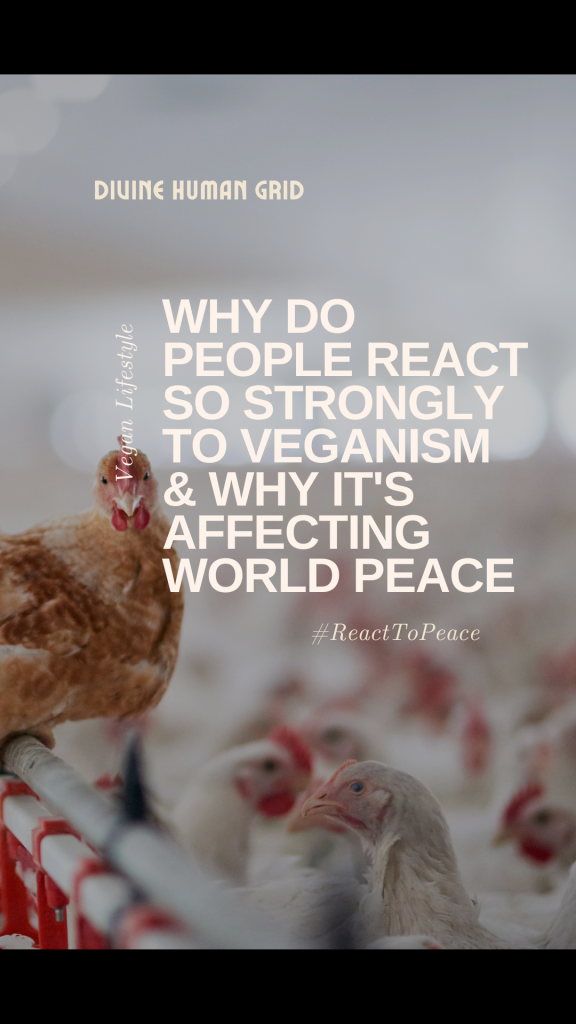
When people react and say, “You vegans are like this and that,” as an excuse for why they can’t change their way of living, I roll my eyes.
I get it. If someone decides they can’t change, they just can’t.
However, that tells me more than just their stance on veganism — it reveals how they handle change in general and how they react to new information that challenges their habits. And that pattern extends far beyond food — to addictions, destructive behaviors, and avoidance patterns. How we do one thing is how we do everything.
The most triggered people aren’t just “meat eaters.” They’re people deeply attached to emotional addictions. They wouldn’t react so strongly if they were at peace with their choices. But instead of scrolling past the “horrible vegans,” they feel the need to attack.
Is The Reaction Rebellion or Addiction? The Real Reason People Resist Veganism
It’s a classic emasculated masculine energy—victimhood wrapped in blame. I’ve seen people aggressively promoting carnivore diets, desperate for a fight, waiting for a vegan to challenge them, and expecting war.
And yet, how disappointing it must be when a vegan watches silently, knowing full well how energy works. Knowing that violence breeds consequences—whether in the body, the psyche, or the collective.
No Authentic Masculine Needs to Harm to Feel Powerful

This does not target men since all humans have masculine and feminine energies within us. The most potent, grounded masculine energy doesn’t need to dominate or destroy to feel powerful or in control, whether that’s masked for their health or their appetite. It doesn’t seek validation through resistance. It questions everything, including the outdated belief that killing and captivation are necessary.
A truly evolved masculine knows they can co-create a reality that doesn’t require deliberate harm. Not because they’re trying to be “nice”—but because they understand the cause-and-effect of violence.
Why Do People Need The Resistance?
It’s fascinating how some people crave opposition to feel validated as if they need someone to push against them to justify their rebellion.
Wars don’t start with governments selling weapons. They begin in the mind — humans create everyday battles to avoid facing themselves. This energy plays out in predictable ways. People seek release wherever they can—whether through food, conflict, or control.
And in the process, vegans become an easy scapegoat.

“All Lives Matter,” Right?
The same people who say “all lives matter” somehow exclude cows, pigs, chickens—any life that doesn’t fit into their narrative.
My reason for promoting veganism is peace. But peace is a complex thing. Can peace exist without war?
That’s the real question. And it’s all connected.
If someone honestly doesn’t want to go vegan, they could keep eating the way they always have. Humanity has done this for thousands of years, and no one is stopping them.
So, if they feel the need to react, why?
They say it’s because they feel judged. Criticized. But vegans stating facts about suffering isn’t judgment —it’s truth.
And if truth feels like an attack, maybe it’s not about vegans at all.
Resistance Is Attachment, Not Rebellion
People terrified of losing their lifestyle aren’t just attached to meat—they’re attached to familiarity.
They fear a world where their comfort foods disappear, where their childhood dishes don’t taste the same. But with the explosion of plant-based options, that fear is outdated. The real issue isn’t nutrients — it’s emotional dependency.
Let’s be real: the reactivity toward veganism isn’t about food. It’s about not wanting to let go like a five-year-old clinging to a childhood blanket.
And the irony? People who fear death the most are the ones who perpetuate it.

You Either Want the Lifestyle, or You Don’t
At the end of the day, if someone genuinely wanted to go vegan, they wouldn’t let the behavior of other vegans stop them. And if they don’t want to be vegan, nothing a vegan says can make them change. After all, creating reality doesn’t come from convincing someone else to change. It comes through our energy.
The whole “vegans are too pushy” excuse is just a distraction. Those who are ready will make the shift on their own terms.
And yet, there’s a reason why every ancient philosophy promotes a plant-based diet.
How we treat animals is not separate from how we treat each other. A world that normalizes violence against the most innocent will always struggle to cultivate true peace.
If we justify suffering for convenience, how can we expect humanity to operate differently globally?
Wars don’t start with leaders—they begin with conditioning. A society that unconsciously sees harm as necessary will always find reasons to justify conflict, whether in factory farms or on the battlefield.
If suffering itself doesn’t convince someone, what will?
Vegans don’t promote this lifestyle as superior. They encourage it because it’s possible.
I Shouldn’t Have to Explain This
I shouldn’t have to explain why caging and killing sentient beings is problematic.
I shouldn’t have to explain why “Mmm, dead animal, so tasty” is an oddly defensive response to a simple discussion about ethics.
I shouldn’t have to explain that paying for suffering makes someone complicit in it.
And I especially shouldn’t have to explain why the argument that “animals signed a contract to be food” is the most significant spiritual bypassing in history.
Imagine telling Indigenous tribes that colonization was justified because they “agreed” to it. That’s the logic “spiritual” people use when claiming animals “chose” their fate. Even if it makes sense from a “higher” perspective, it doesn’t mean it is what we need to succumb to because all humans can revise the contracts as well as divine human beings, but this is another subject.
At some point, we have to get out of the dream that consists of the cycle of violence.

Violence Creates Violence
The suffering humanity faces today isn’t because vegans make people feel guilty.
It’s because, as a species, we’ve practiced violence for so long that it’s become normal.
And now? That violence is coming full circle.
The real question is: When do we break the cycle?
Observe Your Resistance
If you’ve made it this far, take a moment. How did your body react while reading this?
Did you feel defensive?
Did you find yourself formulating counterarguments before even finishing a sentence?
Did you feel the need to justify, dismiss, or push back?
That’s not random. That’s your mind protecting its conditioning.
Cognitive dissonance occurs when the truth conflicts with a deeply ingrained belief. It’s uncomfortable and feels like an internal war. The easiest way to escape that tension is to attack the messenger.
But what if, instead of reacting, you just… observed?
What if, for a brief moment, you allowed yourself to sit with the discomfort?
To see where it lands in your body?
To question whether resistance comes from logic—or something much deeper, conditioned, or afraid?
I’m not asking you to change. I’m asking you to witness yourself.
Because when we strip away the noise — the labels, the excuses, the projections — what’s left?
Just you and your choice.
And maybe, just maybe, the possibility of something different.
To learn more about the actual conditions of animal welfare, visit https://www.peta.org/
You might also want to read